The problem isn't your dog's personality. It's an untreated fear response.
"She destroys the house the second I leave." "I can't even go to work without my stomach in knots." "The neighbors have started leaving notes about the howling." If you've said any of those out loud, read the next sentence twice, because it's the one that changes everything:
Your dog is not being spiteful, and your dog is not broken. Your dog is having a panic attack.
Dogs don't panic when you leave because they're badly behaved. They panic because somewhere along the way, your absence became associated with danger in their nervous system — and nothing has given them a reason to update that association. Ogata (2016) confirmed that separation anxiety is rooted in hyper-attachment and genuine distress, not disobedience — and that systematic desensitization is the gold-standard behavioral intervention. de Assis et al. (2020) went further, showing that separation-related problems are not one disorder but several subtypes — frustration, fear, and attachment disturbance — each requiring different intervention. Tiira & Lohi (2015) found that early-life experiences, including insufficient socialization, are significantly associated with anxiety-related behaviors in adult dogs. These are the primary risk factors — not breed, not temperament.
That's not a character flaw. It's learning. Which means it can be unlearned.
In a controlled trial, systematic desensitization paired with counter-conditioning produced near-complete elimination of separation-related behavior in 6 of 8 dogs — and the improvement was still holding three months later. This isn't a coping aid. It's a resolution, and it's been measured.
— Butler, Sargisson & Elliffe (2011), Applied Animal Behaviour Science 129(2–4), 136–145The Separation Confidence Method works by systematically exposing your dog to absences at a level of intensity they can tolerate without panicking, then building from there. Not throwing them in the deep end. Not flooding them with alone time until they give up. Building, one second at a time, a new emotional truth: you leave, and it's fine, and you always come back.
This sounds simple. The execution is not — and that's why most owners fail at it without a structured protocol.
You need to know exactly where your dog's threshold is. How fast to move. What to do when you have a setback that wipes out two weeks of progress. How to neutralize the jacket-and-keys ritual that triggers panic before you've even opened the door.
That's what the 12 lessons teach.
You start with the neuroscience of fear — not as filler, but because understanding why your dog physically cannot "calm down on command" (cortisol takes 40–60 minutes to clear the bloodstream after a stress event; Kaszycka et al., 2025) is what stops you from making the mistakes that reset the clock. Then you map your dog's actual baseline. Then you run the protocol: departure-cue desensitization first, then graduated absences tracked in the companion workbook.
The research is clear. Vieira de Castro et al. (2020) found that aversive training produces significantly higher stress behaviors than reward-based methods. Ziv (2017) documented long-term welfare impacts. China et al. (2020) found reward-based training was at least as effective as electronic-collar training, with significantly fewer signs of stress. None of this is controversial in the behavior science literature. It just hasn't reached most dog owners.
Pup Class was built on that published foundation. No dominance theory. No punishment. No "just let them cry it out."
The mechanism that works is graduated exposure, built on trust, tracked carefully so you never push too fast.
What the panic is costing both of you
Picture the camera footage you've probably already seen. The moment the door clicks shut, your dog doesn't settle — they spiral. Pacing. Panting. Scratching at the door until their nails are raw. Howling at a pitch the neighbors have stopped being polite about. For some dogs it lasts the whole time you're gone. That is not a dog being naughty. That is a living thing in sustained panic, alone, for hours.
And it's costing you too — in ways you've quietly reorganized your life around. You turn down the dinner invitation. You leave the wedding early. You pay for daycare you can't really afford, or you rush home on your lunch break with your heart in your throat. You've structured your entire week around a dog who can't be left. The guilt when you leave and the dread of what you'll come home to never fully switch off.
Butler, Sargisson & Elliffe (2011) put the reward-based answer to the test in a controlled trial: systematic desensitization and counter-conditioning nearly eliminated separation-related behavior in most of the dogs studied, with the gains still holding at the three-month follow-up. That is the exact protocol Home Alone teaches — not a coping aid, a resolution.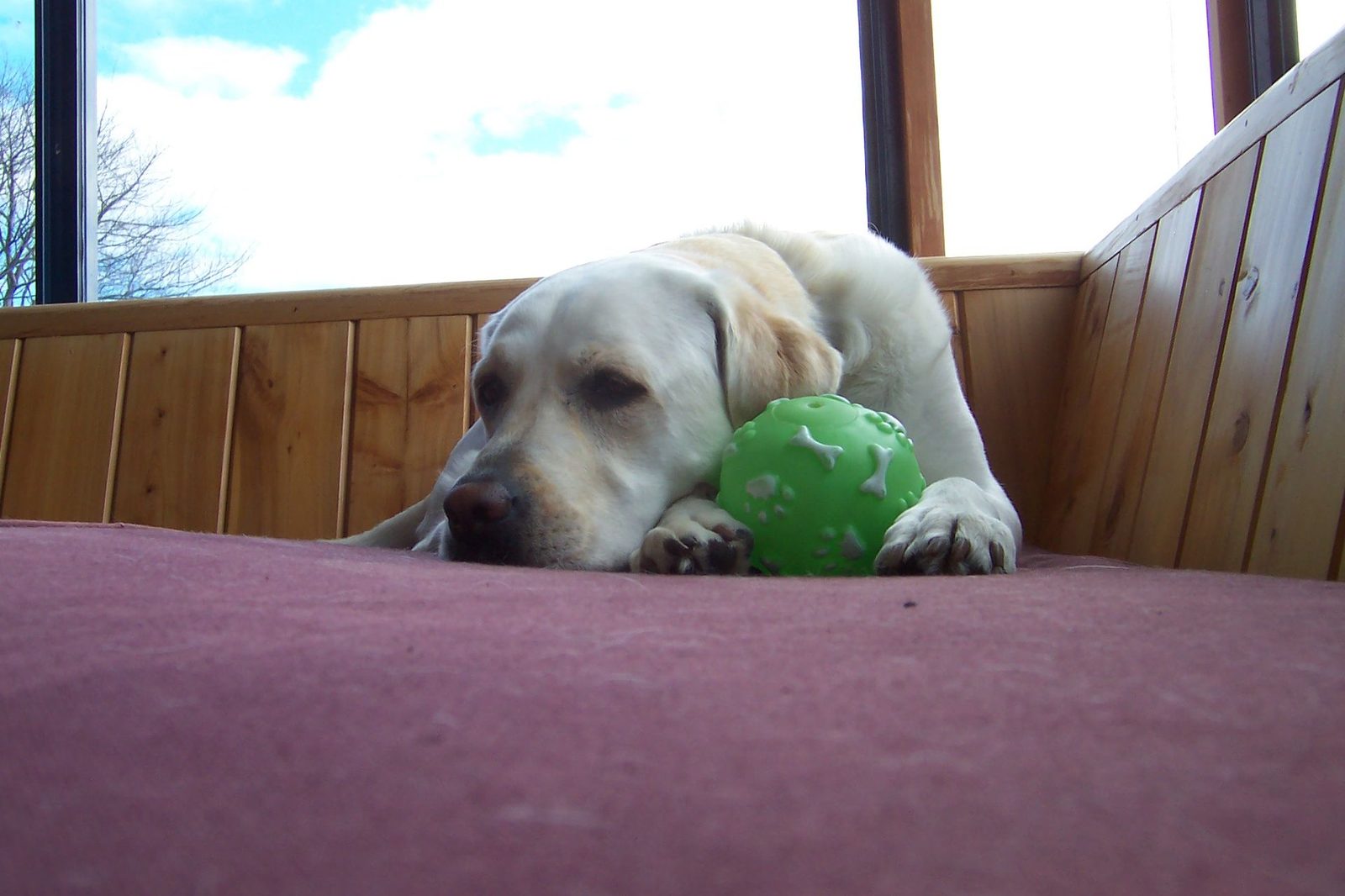
What changes, week by week
You won't feel like you're white-knuckling through this. The protocol is built so that progress is visible almost immediately, because every step is sized to your dog's actual tolerance:
- First few days: you neutralize the "jacket-and-keys" ritual, so the panic stops firing before you've even reached the door.
- First week or two: your dog learns to stay relaxed for absences measured in seconds, then minutes — the foundation the whole ladder is built on.
- Across the program: you extend the absence duration in increments small enough that your dog never tips into panic, tracking every session in the workbook so you always know the next right step.
- The setback plan: because there will be a bad day, you'll know exactly how to recover without losing your gains — the single skill that separates owners who succeed from owners who quit.
"But she's been like this for years."
The age of the habit doesn't change the mechanism — it just means more reps to rewrite, and a protocol built to do exactly that. Flannigan & Dodman (2001) identified clear risk factors for separation anxiety — single-owner homes, pet-store puppies, no companion animals — but none of them made the condition permanent. Separation anxiety is a learned association, and learned associations respond to graduated exposure whether they're six weeks or six years old. Older, more entrenched cases simply start at a smaller step and move at a gentler pace. The method doesn't change. Your dog is not too far gone.
Why "let them cry it out" makes it worse
The single most common piece of advice you'll get is also the most damaging: just leave them, they'll get used to it. That's called flooding — forcing a terrified dog to endure the full intensity of the thing they're afraid of with no escape. It doesn't build tolerance. It confirms the fear. Every panicked hour spent alone is another rep that teaches your dog being left = terror, burned in deeper.
Graduated departure training does the opposite — and the learning science tells us exactly why it works. As Rescorla (1988) demonstrated, Pavlovian conditioning is about the informational relationship between events, not just their pairing; your dog needs to learn that departure reliably predicts safety, not danger. You work in absences so small your dog never tips into panic — seconds at first — and build from there, always under the threshold where the fear fires. Every rep is a win. Every win rewrites the association one notch: you leave, and it's fine, and you always come back. Slow is the fast way. This is the difference between a dog who white-knuckles through your absence and a dog who genuinely relaxes when you go.
The offer, plain
You get all 12 audio lessons and the companion progress workbook — the complete systematic-desensitization protocol that the research above put to the test — for a one-time $47, against a regular price of $120. Instant access, yours for life, backed by our 30-day money-back guarantee (full terms).
Weigh that against what the anxiety is already costing you — the daycare bills, the declined invitations, the lunch-break dashes home, the guilt that never fully switches off. Forty-seven dollars to start rewriting the one association that's been running your whole week.
Your dog didn't choose to be anxious. But you can give them a way out. 30-day money-back guarantee — see terms.