
How to Help Your Dog Feel Safe Home Alone
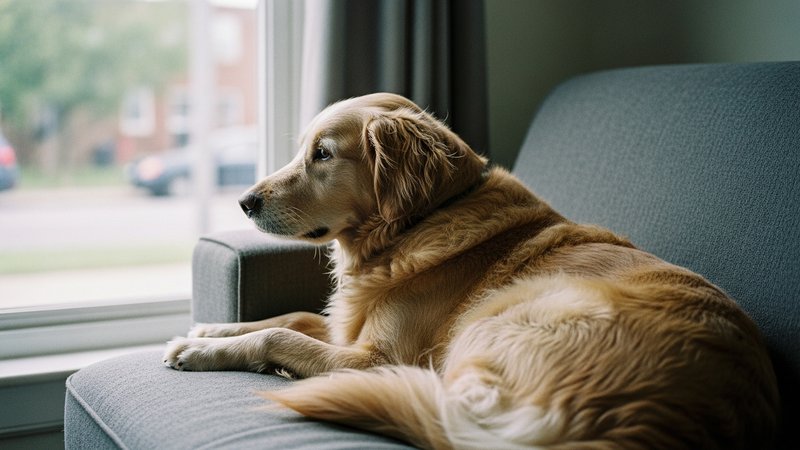
Being left alone is not something dogs are born knowing how to do. It's a skill — and like any skill, it can be taught gently or forced badly. If your dog struggles when you leave, the answer isn't to "let them cry it out." That usually deepens the panic. Instead, you build your dog's confidence in small, achievable steps until alone-time feels safe and ordinary.
Why "tough love" backfires
The old advice to ignore the distress and let a dog get used to it treats panic like a bad habit. But for a frightened dog, long absences full-on flood them with fear, over and over, with no chance to learn that being alone is survivable. Far from building resilience, this often makes the anxiety stronger. Separation anxiety is a recognised clinical disorder with identifiable risk factors including rehoming history and hyper-attachment (Ogata, 2016; Flannigan & Dodman, 2001), and it calls for a structured, evidence-based approach — not endurance.
The reward-based alternative does the opposite: it keeps your dog under the level where panic kicks in — a systematic desensitisation approach shown to be effective for separation-related behaviours (Butler et al., 2011) — so every absence ends well and your dog slowly learns that you always come back. Aversive training methods are associated with poorer welfare outcomes across the board (Vieira de Castro et al., 2020). We only ever use force-free methods at Pup Class, and this is exactly where they pay off.
Start absurdly small
The single biggest mistake is starting too big. Begin with absences so short your dog stays completely relaxed.
Step out and come straight back
Walk to the door, step outside, and immediately return — before your dog has time to worry. A few seconds is plenty at first. Repeat this until your dog is unbothered, even a little bored by it.
Build seconds into minutes
Only when your dog is relaxed at one duration do you stretch it slightly. Seconds become a minute, a minute becomes a few. Progress is measured by your dog staying calm, not by the clock. If you see distress, you've gone too far too fast — drop back to an easier step and build up again.
Defuse your departure cues
Dogs are brilliant at noticing patterns. Picking up keys, putting on shoes, grabbing a coat — these "leaving cues" can trigger anxiety before you've even reached the door.
Practise them out of context. Pick up your keys and sit back down. Put on your coat and make a cup of tea. Do this often enough and the cues stop predicting abandonment, which lowers the worry before any real departure.
Set up a calm environment
Once your dog can handle short absences without panic, the environment can help:
- A comfortable, safe space your dog actually likes — not a place they associate with being shut away.
- Background sound, like soft music or a radio, which some dogs find soothing.
- Something good to do, such as a stuffed food toy, but only if your dog is calm enough to use it. A dog who won't touch the toy is telling you the absence is still too much.
Remember: these are aids, not substitutes for the gradual training. A puzzle toy won't fix panic on its own.
Protect the wins
Consistency keeps progress from unravelling. A few helpful habits:
- Keep arrivals and departures low-key. Big emotional goodbyes and hellos make the contrast between "with you" and "alone" sharper.
- Avoid absences your dog can't handle yet while you're still training. If you must leave for longer, arrange a sitter, a friend, or daycare so your dog isn't pushed over threshold and set back.
- End every practice session on a calm note. Quitting while your dog is relaxed protects all the good work.
When it's more than mild
Some dogs experience genuine separation anxiety — intense panic that needs a careful, structured plan. If your dog shows real distress, our Home Alone program lays out gradual absence training in detail, and you can browse all our reward-based programs to find the best match.
The takeaway
Confidence with being alone is built one calm, successful absence at a time — never by forcing your dog to endure panic. Want to know how much your dog struggles and where to begin? Take the free 60-second quiz and we'll help you start in the right place.
References
Butler, R., et al. (2011). The efficacy of systematic desensitization for treating the separation-related problem behaviour of domestic dogs. Applied Animal Behaviour Science, 129(2-4), 136-145.
Flannigan, G., & Dodman, N. H. (2001). Risk factors and behaviors associated with separation anxiety in dogs. JAVMA, 219(4), 460-466.
Ogata, N. (2016). Separation anxiety in dogs. Journal of Veterinary Behavior, 16, 28-35.
Vieira de Castro, A. C., Fuchs, D., Morello, G. M., Pastur, S., de Sousa, L., & Olsson, I. A. S. (2020). Does training method matter? Evidence for the negative impact of aversive-based methods on companion dog welfare. PLOS ONE, 15(12), e0225023.
Ziv, G. (2017). The effects of using aversive training methods in dogs—A review. Journal of Veterinary Behavior, 19, 50-60.
de Assis, L. S., et al. (2020). Developing diagnostic frameworks in veterinary behavioral medicine: Disambiguating separation related problems in dogs. Frontiers in Veterinary Science, 6, 499.
Konok, V., Doka, A., & Miklosi, A. (2011). The behavior of the domestic dog during separation from and reunion with the owner. Applied Animal Behaviour Science, 135(4), 300-308.
Tiira, K., & Lohi, H. (2015). Early life experiences and exercise associate with canine anxieties. PLoS ONE, 10(11), e0141907.
- Start with absences so short your dog stays completely relaxed — even just seconds
- Only stretch duration when your dog is calm at the current level; if distress appears, drop back
- Practise departure cues out of context — pick up keys and sit down, put on coat and make tea
- Keep arrivals and departures low-key to reduce the contrast between 'with you' and 'alone'
- Use a sitter or daycare for unavoidable long absences while still training
- Being alone is a skill dogs learn, not something they're born knowing
- Flooding a panicked dog with long absences deepens the anxiety rather than building resilience
- Systematic desensitisation — staying under the distress threshold — is the evidence-based approach
- Environmental aids like background sound or food toys only help once the dog is calm enough to use them
Want to go deeper?
Home Alone — Separation Confidence Method is our step-by-step audio programme for separation anxiety. A 12-lesson audio program that teaches your dog to relax when you leave — no punishment, no panic, just science-backed graduated exposure.
See Home Alone — Separation Confidence Method →