
House Training a Puppy: A Stress-Free Plan
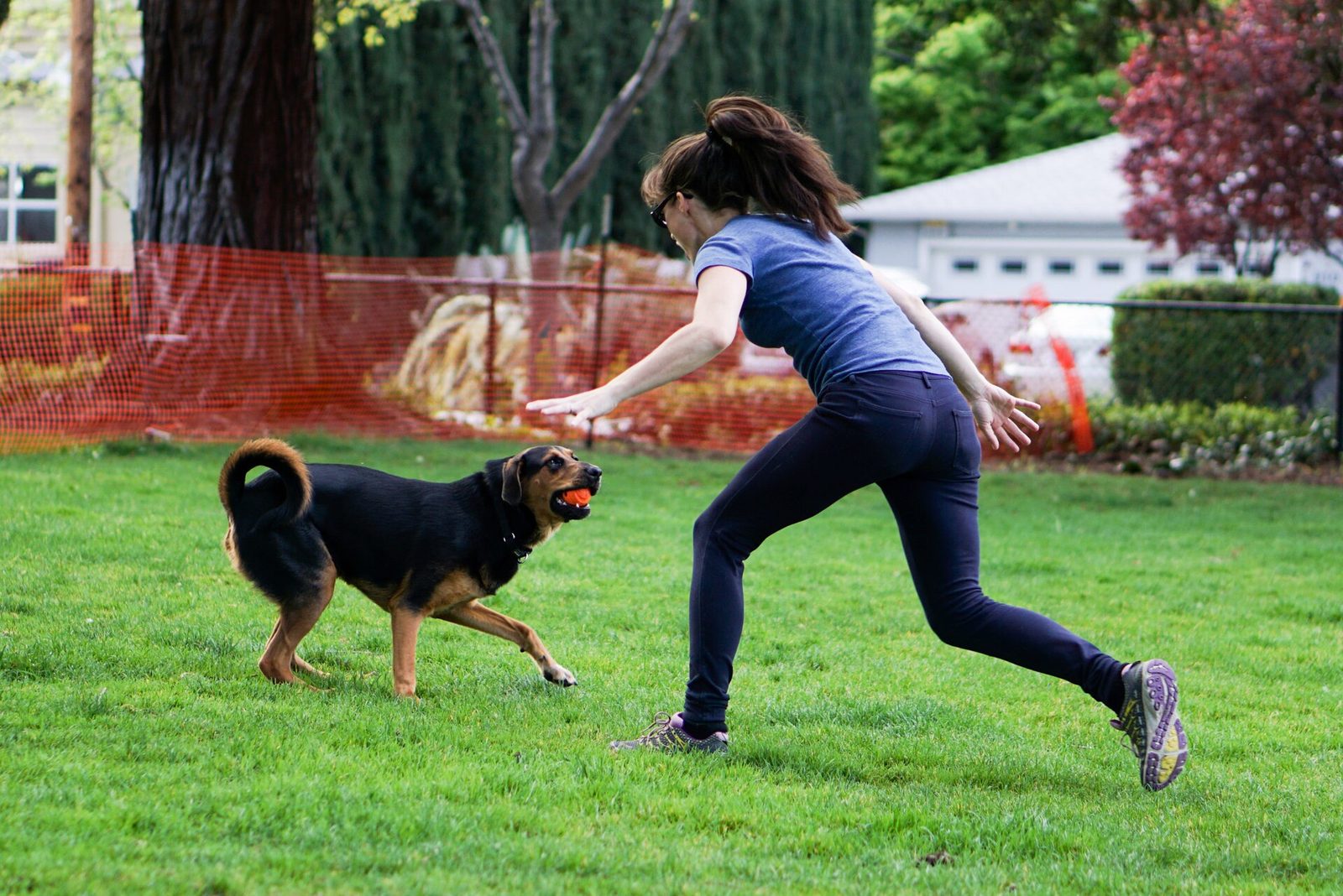
House training feels daunting, but it's actually one of the more straightforward things you'll teach. There's no clever trick involved — just management, good timing, and generous rewards. Get those three right and most puppies pick it up quickly. Here's the calm, accident-minimising plan.
The mindset: prevent, don't punish
The fastest way to a clean puppy is to prevent accidents from happening in the first place, then richly reward toileting in the right spot. Punishing accidents does the opposite of helping — dogs trained with punishment-based methods show more problem behaviours, not fewer (Blackwell, Twells, Seawright & Casey, 2008; Hiby, Rooney & Bradshaw, 2004) — more on that below. Think of your job as setting your puppy up to get it right so often that the right habit becomes automatic.
Step 1: Take your puppy out — a lot
Young puppies have tiny bladders and little control. They need frequent trips outside, especially at these key moments:
- First thing in the morning, the instant they wake.
- After every nap.
- After meals and big drinks.
- After play sessions.
- Roughly every hour or two in between while they're very young.
- Last thing at night before bed.
It's better to take your puppy out too often than too rarely. Every successful trip outside is a rep that builds the habit.
Step 2: Reward instantly and well
This is the step owners most often under-do. The moment your puppy finishes toileting outside, mark it with a happy word and give a treat right there, outside. Timing matters enormously: reward within a couple of seconds, while they're still in the spot, so your puppy connects the treat to the act of going outdoors.
If you wait until you're back inside to reward, your puppy learns that coming indoors pays — not that going outside does. Take treats out with you every time in the early weeks.
Step 3: Manage the indoor environment
Between trips outside, you prevent accidents through supervision and confinement:
Active supervision
When your puppy is loose in the house, watch them. Learn their "I need to go" signals — circling, sniffing the floor, sudden restlessness, heading for a corner. The second you see one, scoop them up and head outside.
Use confinement wisely
You can't watch a puppy every second. When you can't, use a crate, playpen, or a small puppy-proofed area. Most puppies naturally avoid soiling their immediate resting space, so sensible confinement buys you time between outdoor trips. (A crate should always be a comfortable, positive space — never used as punishment.)
Step 4: Build a predictable routine
Puppies thrive on routine, and a regular schedule makes house training much faster. Feed at consistent times, and their toileting will become more predictable too. Keep a loose rhythm of wake, out, play, rest, repeat. The more predictable the day, the easier it is to be in the right place at the right time.
Why punishment backfires
Rubbing a puppy's nose in a mess or scolding them after the fact simply doesn't work — and can make things worse. Research confirms that punishment-based approaches are associated with increased anxiety, fear, and behavioural problems (Arhant et al., 2010; Vieira de Castro et al., 2020). Your puppy can't connect a telling-off now to something they did minutes ago. What they often do learn is that toileting in front of you is dangerous, so they start hiding to go — behind the sofa, in another room — which makes accidents harder to catch and the whole process slower.
We only ever recommend reward-based, force-free methods at Pup Class. If you find an accident you didn't catch in the act, just clean it up calmly with an enzymatic cleaner (ordinary cleaners can leave a scent that draws your puppy back) and resolve to supervise more closely next time.
Handling accidents in the moment
If you catch your puppy mid-accident, don't punish — just interrupt gently with a cheerful sound, whisk them outside to finish, and reward them if they do. Accidents are part of the process, not a failure.
The takeaway
House training is management, timing, and rewards — take your puppy out often, pay them generously the instant they go outside, prevent indoor accidents, and skip the punishment entirely. For a full puppy foundation that covers toileting, biting, and manners together, explore our reward-based programs. Not sure where to start with your puppy? Take the free 60-second quiz.
References
Arhant, C., et al. (2010). Behaviour of smaller and larger dogs: Effects of training methods. Applied Animal Behaviour Science, 123(3-4), 131-142.
Blackwell, E. J., et al. (2008). The relationship between training methods and the occurrence of behavior problems. Journal of Veterinary Behavior, 3(5), 207-217.
Hiby, E. F., et al. (2004). Dog training methods: their use, effectiveness and interaction with behaviour and welfare. Animal Welfare, 13, 63-69.
Vieira de Castro, A. C., Fuchs, D., Morello, G. M., Pastur, S., de Sousa, L., & Olsson, I. A. S. (2020). Does training method matter? Evidence for the negative impact of aversive-based methods on companion dog welfare. PLOS ONE, 15(12), e0225023.
- Take your puppy out after every nap, meal, play session, and roughly every 1-2 hours
- Reward instantly outside — treat within seconds at the spot, not after going back inside
- Watch for circling, sniffing, or sudden restlessness as 'I need to go' signals
- Use a crate or playpen when you can't supervise to prevent indoor accidents
- Clean accidents with enzymatic cleaner to remove scent that draws the puppy back
- Preventing accidents and rewarding the right spot is faster than punishing mistakes
- Puppies punished for accidents learn to hide and toilet out of sight, making training harder
- A predictable daily routine of wake-out-play-rest makes toileting predictable too
- Punishment-based house training is linked to increased anxiety and more behavioural problems
Struggling with the same thing?
Take the free 60-second quiz and get a science-based plan — results sent straight to your inbox.
Take the quiz →Prefer to read first? Grab the free 20-page guide →