
Dog Reactivity Training: The Reward-Based Approach That Works
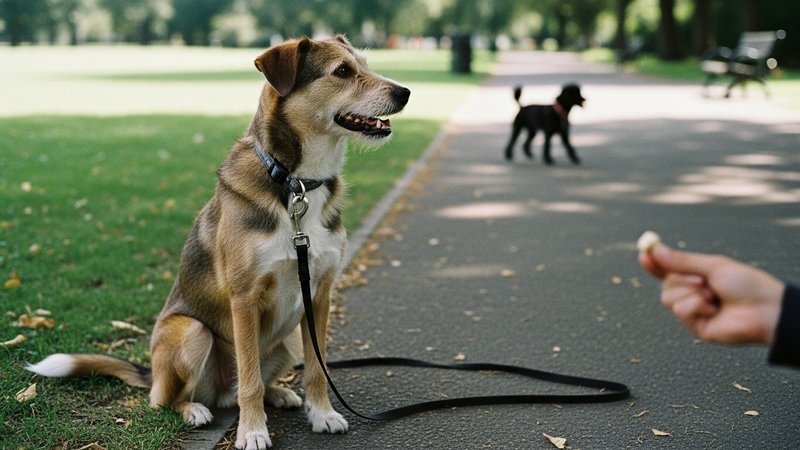
If your dog barks, lunges, or strains at the leash when they see other dogs, people, or traffic, you are not alone — and you have not failed your dog. Reactivity is one of the most common challenges owners bring to trainers, and the good news is that dog reactivity training genuinely works when it's approached with patience and the right tools. This guide walks you through exactly what to do, why it works, and what realistic progress looks like.
What Is Reactivity (and Why Does It Happen)?
Reactivity means your dog reacts to certain triggers — other dogs, strangers, cyclists, loud noises — with behaviour that looks dramatic: barking, lunging, growling, or freezing. It usually comes from one of two places: anxiety (the trigger feels threatening) or frustration (the trigger is exciting and your dog can't reach it). Either way, the outburst is your dog communicating that they're overwhelmed.
Understanding this matters because it shapes everything about how you train. Punishing an anxious or frustrated dog for reacting tends to suppress the signal without addressing the feeling underneath — and can make the underlying emotional state worse over time. Reward-based reactive dog training works differently: it changes how your dog feels about the trigger, which naturally changes how they behave.
The Foundation: Changing the Emotional Association
The core technique behind effective desensitization training for dog reactivity is pairing the trigger with something your dog loves — usually high-value food — at a distance where the dog can notice the trigger but stay calm. This is sometimes called counter-conditioning.
Here's why it works: when a dog repeatedly experiences "scary thing appears → wonderful treat arrives," their brain begins to associate that trigger with something good rather than something threatening. Over time, the emotional charge around the trigger decreases, and calmer behaviour follows naturally.
Step 1 — Find Your Dog's Threshold
Your dog has a threshold distance — the point at which they can see a trigger without tipping into full reactivity. This might be across a park, or it might be the length of two streets. Start every session below this threshold: where your dog can notice the trigger, perhaps glance at it, but remain loose-bodied and able to eat treats.
Step 2 — Mark and Reward Calm Attention
The moment your dog notices the trigger and looks without escalating, quietly mark it (a clicker or a calm "yes") and deliver a treat. You are reinforcing the act of noticing calmly rather than reacting. Keep sessions short — a few calm sightings is a win.
Step 3 — Build Duration Before Distance
Before you inch closer to the trigger, practise holding that calm state for longer stretches at the same distance. Rushing forward too quickly is the most common reason progress stalls. If your dog goes over threshold, simply increase distance and try again — no correction needed, just information.
Step 4 — Introduce a Cued Behaviour
Once your dog is reliably calm at their threshold distance, add a specific behaviour they can default to when a trigger appears — a hand touch, a "look at me," or a settled walk beside you. This gives your dog something constructive to do with the arousal energy, and it gives you a way to redirect gently before things escalate.
Step 5 — Gradually Decrease Distance
Only when your dog is consistently relaxed at the current distance should you move slightly closer — and always in small increments. Progress will feel slow, and that's exactly right. Steady, gradual exposure builds lasting change; rushing creates setbacks.
What to Expect: Realistic Timelines
Progress in reactive dog training is rarely linear. You will have brilliant sessions and sessions that feel like you've gone backwards. That is normal. Variables like your dog's history, their baseline anxiety levels, and how consistently you can practise all affect the pace. Some dogs show noticeable change within weeks; others need many months of consistent work. The measure of progress isn't perfection — it's a gradual widening of what your dog can handle calmly.
Managing the Environment While You Train
Training sessions are controlled practice, but daily life keeps happening. Until your dog's threshold improves, manage their environment to reduce unnecessary exposure: cross the street early, change your walking times, use visual barriers. These aren't failures — they're smart ways to prevent rehearsal of the reactive behaviour, which itself can make the pattern more ingrained.
Getting Structured Support
Working through reactivity on your own is absolutely possible, and these steps are a solid place to start. But if you want guided progression, feedback on your technique, and a community of owners navigating the same journey, a structured programme makes a real difference. Explore our reward-based training programmes to find an option that fits your dog's needs and your schedule — including options designed specifically for reactive dogs. You can also take our free 60-second quiz to get a personalised recommendation.
Reactivity is not a personality flaw — it's a skill gap, and every calm moment you build with your dog is a brick in a more confident future.
Struggling with the same thing?
Take the free 60-second quiz and get a science-based plan — results sent straight to your inbox.
Take the quiz →Prefer to read first? Grab the free 20-page guide →