
My Dog destroys furniture: What to Do
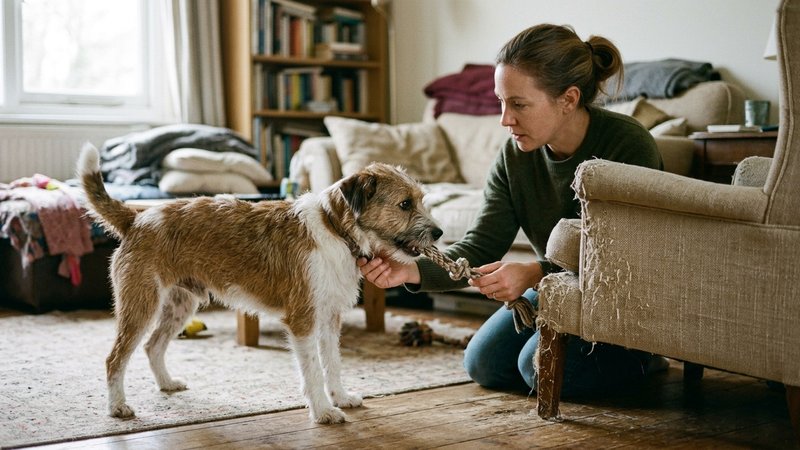
Coming home to a chewed sofa leg or shredded cushion is genuinely disheartening — especially when you have no idea why it keeps happening. If your dog destroys furniture, you are far from alone, and more importantly, there is a clear path forward. Destructive chewing is almost always a communication problem: your dog is telling you something about their needs, their emotional state, or their environment. Once you understand the message, the solution becomes much simpler.
Why Dogs Destroy Furniture in the First Place
Before jumping to fixes, it helps to understand what is driving the behaviour. Dogs chew and destroy things for a handful of well-understood reasons:
- Boredom and under-stimulation. Dogs need both physical exercise and mental engagement. Without enough of either, they will find their own entertainment — and furniture is conveniently available.
- Anxiety. When a dog destroys things when left alone, separation-related distress is often the culprit. Chewing releases calming neurochemicals, so a worried dog reaches for the nearest object.
- Teething or natural chewing drive. Puppies chew because their gums are uncomfortable. Adult dogs chew because it is a deeply ingrained, self-reinforcing behaviour — it simply feels good.
- Inadvertent reinforcement. If your attention (even a frustrated reaction) follows the chewing, the behaviour can be unintentionally rewarded.
Identifying which factor is at play shapes everything you do next.
Step One: Rule Out Separation Anxiety
If your dog destroys things when left alone but is perfectly calm when you are home, separation distress deserves serious attention before you do anything else. Signs include frantic behaviour in the first few minutes of your departure, destructive chewing focused near exits, excessive vocalisation, or toileting despite being otherwise house-trained.
A qualified, force-free trainer or veterinary behaviourist can assess severity and build a tailored plan. Our structured training programmes include guidance on building calm independence from the ground up, which is exactly what separation-related chewing needs.
Step Two: Meet the Physical and Mental Needs First
A tired, satisfied dog is dramatically less likely to redecorate your living room. Before any training intervention, ask honestly:
- Is my dog getting enough aerobic exercise for their breed and age?
- Do they have regular opportunities to sniff, explore, and problem-solve?
- Are they spending long stretches alone without stimulation?
Adding a longer morning walk, a sniff-based game in the garden, or a puzzle feeder at mealtimes can shift the picture noticeably — often faster than any formal training step alone.
Step Three: Manage the Environment
Management is not a defeat — it is smart, kind dog ownership that prevents rehearsal of the unwanted behaviour. Every time a dog chews the sofa, the behaviour is reinforced (it feels good), so reducing opportunities is genuinely protective.
- Use baby gates or a comfortable crate to limit unsupervised access to furnished rooms. A crate, introduced gradually and paired with good things like treats and calm Kongs, becomes a cosy den rather than a punishment.
- Remove temptation where possible. Tuck chair legs behind furniture, use throws on sofas, and keep anything chewable out of reach during the training period.
Step Four: Redirect Onto Legal Chews
The goal is never to stop your dog chewing — it is to redirect that drive onto appropriate outlets. This is where reward-based learning shines, because you are working with the dog's nature rather than against it.
Introduce High-Value Chew Options
Offer a rotation of appropriate chews: rubber toys stuffed with food, raw bones (if suitable for your dog), bully sticks, or tough natural chews. Variety keeps interest high.
Teach "Leave It" and "Take It"
These two cues give you a gentle, clear way to redirect your dog the moment they approach furniture. Reward heavily when they disengage and move toward an appropriate chew instead. The dog learns that moving away from the sofa predicts something even better — which is exactly how reward-based learning works.
Catch Them Chewing Correctly
When you see your dog happily working on their own toy or chew, quietly praise them. Noticing and rewarding the right choice accelerates learning enormously.
Step Five: Build a Consistent Routine
Dogs settle more quickly into calm behaviour when their day is predictable. A reliable rhythm of exercise, feeding, training, rest, and chew time reduces the restless energy that so often leads to destruction. Even short, daily reward-based training sessions serve double duty: they tire the brain and strengthen the bond that makes your dog want to cooperate with you.
When to Ask for Help
If you have worked through the steps above and your dog destroys furniture consistently despite good exercise, management, and redirection, a qualified force-free trainer is your next step. There may be an anxiety component that needs a more individualised approach. Not sure where to start? Take the free 60-second quiz on our homepage to find the right programme for your dog's specific situation.
The single best takeaway: a dog who destroys furniture is not being naughty — they are unmet somewhere, and meeting those needs is what actually solves the problem.
Struggling with the same thing?
Take the free 60-second quiz and get a science-based plan — results sent straight to your inbox.
Take the quiz →Prefer to read first? Grab the free 20-page guide →