
Dog Can'T Settle Down: A Complete Guide
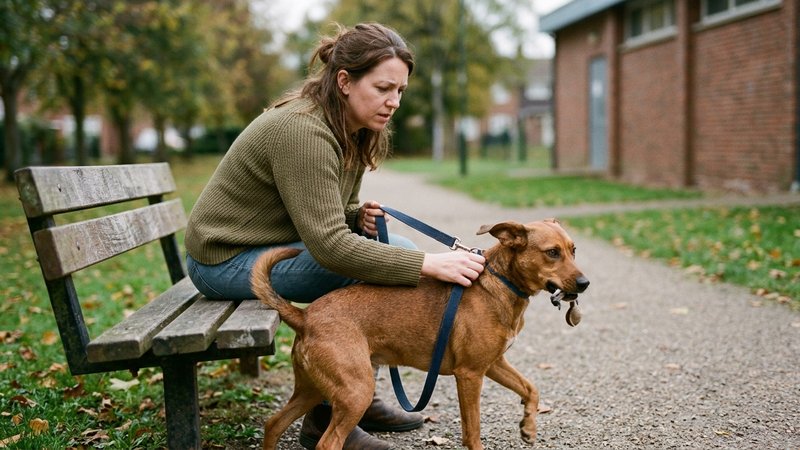
If your dog can't settle down, you're probably exhausted — and so are they, even if it doesn't look that way. Restlessness in dogs is rarely about stubbornness or a difficult personality. More often, it signals that something in their physical or mental world needs adjusting. The good news is that with a consistent, reward-based approach, most dogs can learn to genuinely relax. Here's how to get started.
Understand Why Your Dog Can't Settle Down
Before jumping to training, it helps to look at what might be driving the restlessness. A dog that can't settle down is often communicating one or more of the following:
- Unspent physical energy — they haven't had enough movement to feel physically comfortable
- Unspent mental energy — their brain hasn't been given enough to do
- Anxiety or arousal — something in the environment is keeping their nervous system in a heightened state
- Habit — they've never been taught that being calm is a rewarding place to be
None of these are character flaws. They're all workable starting points.
Step 1: Meet the Physical Basics First
Training a dog to settle is much harder when their body is bursting with energy. Before any settle-training session, make sure they've had appropriate exercise for their breed, age, and health. A good walk, a game of fetch, or some off-lead time in a safe space can take the edge off and make learning much easier.
That said, be careful not to fall into the trap of using exercise alone as a solution. For many dogs — particularly working breeds — more exercise just builds more stamina. You also need to work on teaching calm.
Step 2: Introduce Mental Enrichment
Mental activity is calming in a way that physical exercise alone isn't. Sniffing, problem-solving, and foraging all engage the brain in ways that naturally encourage a more relaxed state afterwards. Try:
- Scatter feeding — spreading part of their meal across the grass so they sniff and search for it
- Food puzzles and snuffle mats — these reward slow, focused effort
- Calm sniff walks — letting them lead with their nose rather than walking to heel the whole time
Building enrichment into your dog's daily routine is one of the most effective tools for a dog that can't settle down, and it requires very little training effort on your part.
Step 3: Teach a 'Settle' on a Mat
This is the core training step. You're not asking your dog to suppress energy — you're teaching them that a specific spot predicts calm and good things. Over time, the mat itself becomes a cue to relax.
How to begin
- Place a comfortable mat or bed in a low-distraction area.
- Every time your dog naturally moves towards or steps onto the mat, mark the moment with a calm "yes" and drop a treat gently onto the mat (rather than offering it excitedly from your hand).
- Keep your own energy quiet and slow — your demeanour teaches them what you're looking for.
Building duration
Once your dog is regularly choosing the mat, start waiting a breath or two before marking. Gradually extend the time before you reward. If they get up, simply wait — don't lure them back. Let them work it out. Reward generously the moment they return and settle again.
Adding real-world value
Practice settle sessions at times when your dog is naturally calmer — after exercise, in the evening. As they get fluent, start asking for a settle at busier moments, like when you're cooking or on a call. Our structured training programs guide you through this kind of progressive skill-building if you'd like more support.
Step 4: Stop Accidentally Rewarding Restlessness
This one is easy to miss. If your dog nudges you, paces, or whines and you respond — even by saying "no" or getting up — they learn that restlessness gets your attention. Attention, even frustrated attention, is rewarding to many dogs.
The alternative is to wait for even a moment of stillness, then calmly acknowledge it. You're not ignoring your dog — you're being intentional about which behaviour gets your response.
Step 5: Consider Anxiety Separately
If your dog can't settle down regardless of exercise, enrichment, or training, underlying anxiety may be playing a role. Signs like panting without heat, pacing, yawning frequently, or an inability to relax even late at night are worth noting. A force-free trainer or your vet can help identify whether anxiety is part of the picture, and there are excellent, humane ways to support anxious dogs. If you're not sure where to start, our programs can help you find the right path.
You can also take our free 60-second quiz to get personalised guidance based on your dog's specific needs.
Teaching a dog to settle is less about control and more about giving them everything they need to feel safe and satisfied — once that foundation is in place, calm tends to follow naturally.
Struggling with the same thing?
Take the free 60-second quiz and get a science-based plan — results sent straight to your inbox.
Take the quiz →Prefer to read first? Grab the free 20-page guide →