
Demand Barking Dog: A Complete Guide
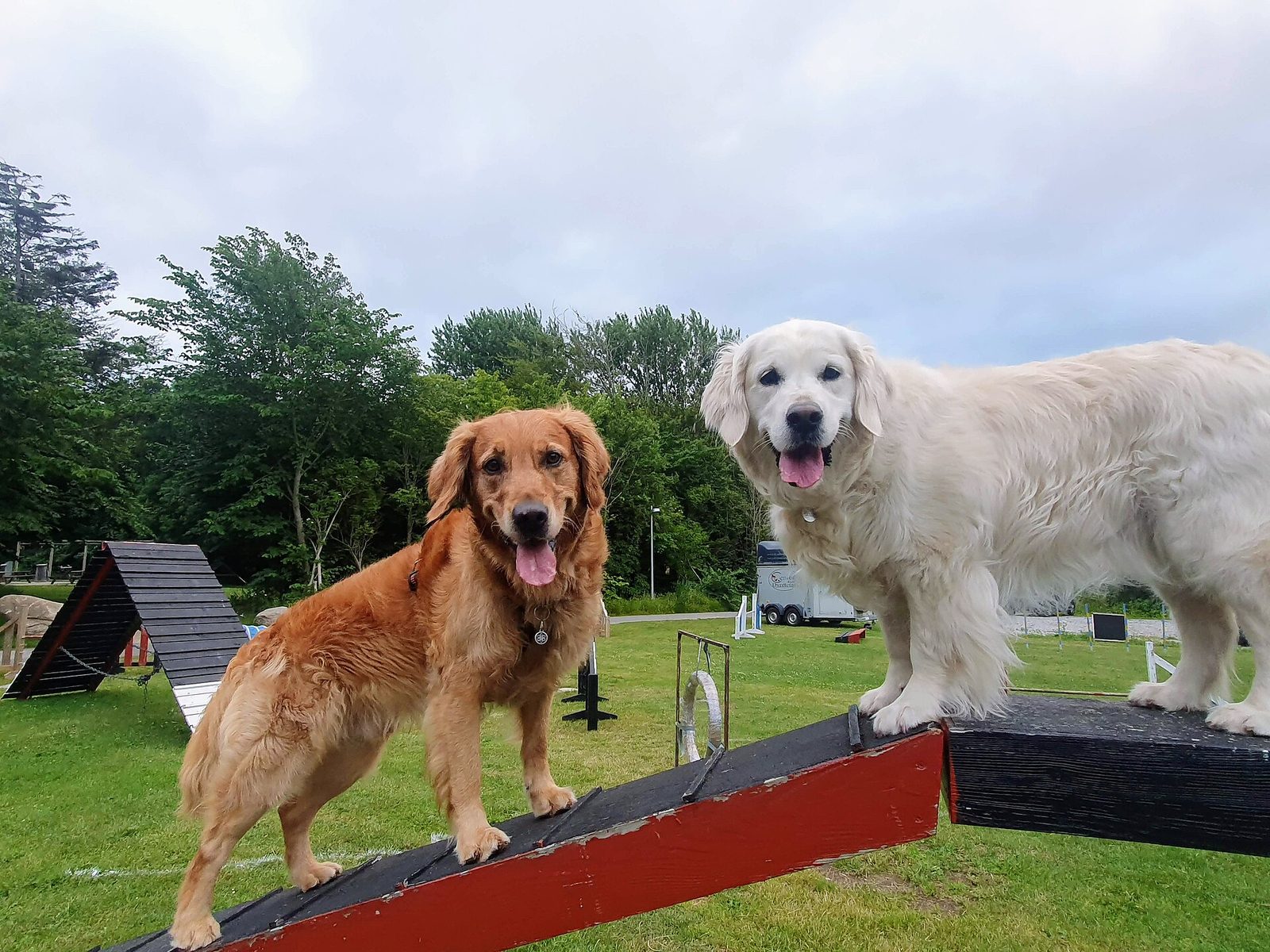
If your dog barks at you for attention, food, play, or to be let outside — and the barking works — you are living with a demand barking dog. It can feel relentless, and it is easy to wonder whether your dog is just being stubborn. The good news is that demand barking is a completely normal, learnable behaviour, which also means it is a completely teachable one to change.
What Is Demand Barking, and Why Does It Happen?
Demand barking is exactly what it sounds like: your dog barks to make something happen. Maybe you put down the food bowl a little faster, tossed the ball to stop the noise, or opened the back door just to get some peace. From your dog's perspective, that bark was a spectacular success.
This is reinforcement learning at its most straightforward. Behaviours that produce a good outcome tend to repeat and strengthen over time. Every time a bark "works," your dog files away a useful piece of information: barking gets me what I want. There is nothing manipulative or dominant about it — your dog is simply doing what has been rewarded, often without either of you fully realising it.
Why Punishment Won't Solve It
It can be tempting to try a sharp "no," a squirt of water, or a startling noise to interrupt the barking. These approaches might briefly suppress the sound, but they do not address the underlying motivation — the desire for food, attention, or play. They also risk creating anxiety around the very things your dog loves (mealtimes, your attention, going outside), which can lead to new problems. A structured, reward-based approach is more effective because it teaches your dog what to do instead, making the new behaviour genuinely worth their while.
How to Stop Demand Barking: A Structured Approach
Step 1 — Identify Your Dog's Triggers
Before you change anything, spend a couple of days noticing when the demand barking dog in your life fires up. Is it at mealtimes? When you sit down with your phone? When their lead appears? Pinpointing the trigger gives you something concrete to work with.
Step 2 — Remove the Reward (Consistently)
The single most important shift is this: the bark must stop working. That means the moment barking begins, the thing your dog wants becomes unavailable. If it is attention, turn away calmly and give no eye contact, no speech, and no touch — even frustrated attention is still attention. If it is food, pause and wait. If it is the lead, step back from the door.
This is called extinction, and it is a well-established principle of learning: behaviours that produce no outcome will gradually weaken. Be prepared for an initial "extinction burst" — a short period where the barking gets louder or more persistent before it fades. This is normal and means the process is working. Hold steady.
Step 3 — Reward Silence and Calm Behaviour Actively
Waiting for quiet is only half the picture. The moment your dog stops barking and offers even a few seconds of calm — four paws on the floor, a relaxed body, a closed mouth — reward that immediately with calm praise, a treat, or whatever they were asking for. You are teaching them that quiet is the behaviour that unlocks good things.
Over time, you can build in a cue like "settle" or "quiet" paired consistently with those calm moments, so the word itself starts to carry meaning.
Step 4 — Teach an Incompatible Behaviour
One of the most practical tools in reward-based training is giving your dog something to do that physically cannot coexist with barking. A reliable "go to your mat" or a sit-stay are excellent choices. If your dog trots to their mat and waits there, they cannot simultaneously be barking at you. Practise this behaviour at calm, low-distraction moments first, then gradually introduce it around their typical demand-barking triggers.
A well-structured training programme can walk you through building these foundation behaviours step by step, which makes the process much faster and less frustrating.
Step 5 — Keep Sessions Short and Consistent
Short, frequent practice is more effective than occasional long sessions. Even a few deliberate repetitions across the day, every day, builds the habit reliably. Consistency across everyone in the household matters enormously here — if one person still responds to barking, the behaviour will persist.
Managing the Environment While You Train
Training takes time, and real life does not pause. Use management to reduce opportunities for the bark to be accidentally rewarded: feed meals behind a baby gate so you can stay calm without feeling pressured, or give your dog a chew or puzzle feeder before settling down with your phone. Management is not a permanent fix, but it keeps the unwanted habit from being reinforced while the new one grows.
Not sure where your dog is on their training journey? Take our free 60-second quiz to find the right starting point.
Demand barking fades when calm, quiet behaviour becomes the most reliable route to the things your dog loves.
Struggling with the same thing?
Take the free 60-second quiz and get a science-based plan — results sent straight to your inbox.
Take the quiz →Prefer to read first? Grab the free 20-page guide →